Real-World Validation of Dynamic Text-based eHMIs for Pedestrian Interaction with Autonomous Shuttles
DURATION
2024.02 ~ 2024.12
10 months
KEY WORDS
Autonomous Driving
Implicit Communication
Urban Safety Design
Contribution
Simulator Build
System Integration
Experiment Execution
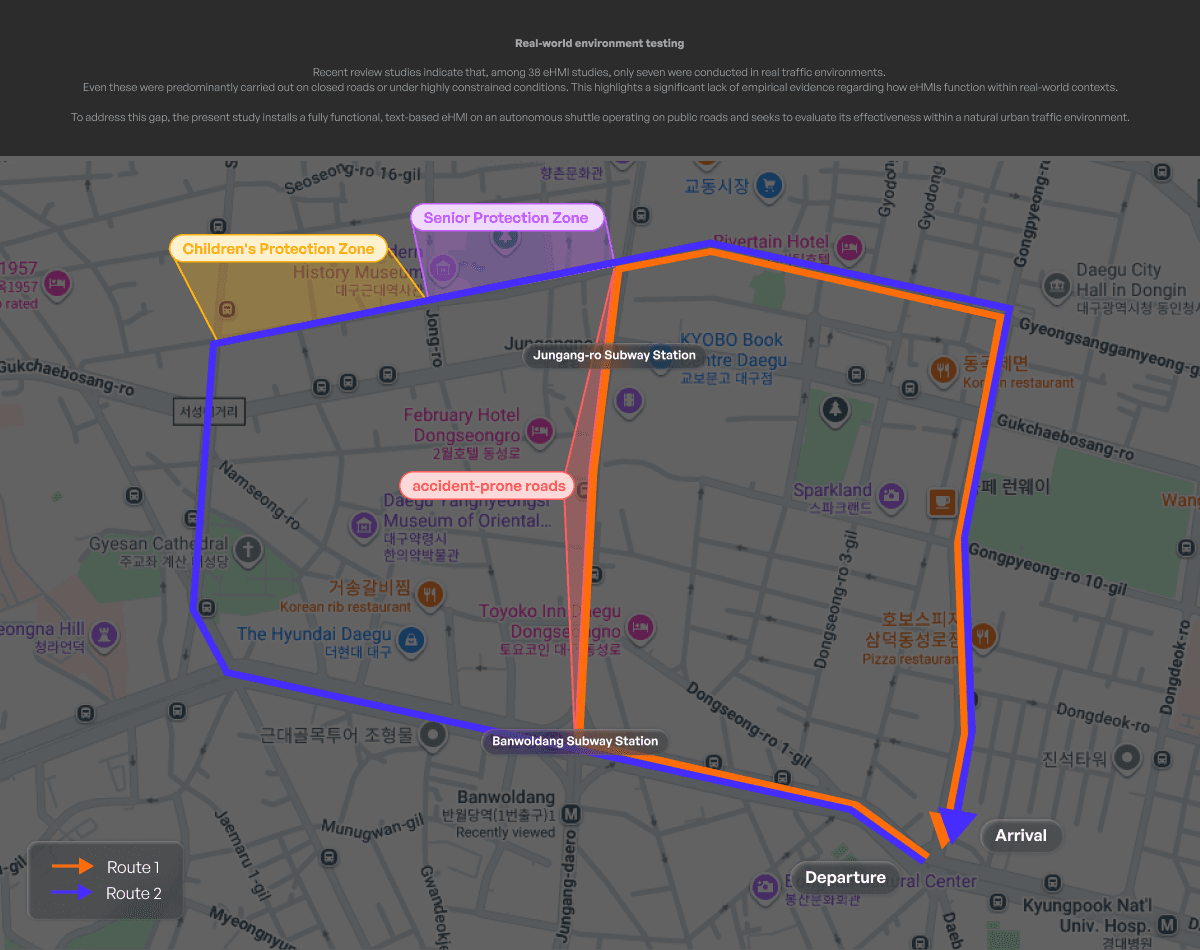
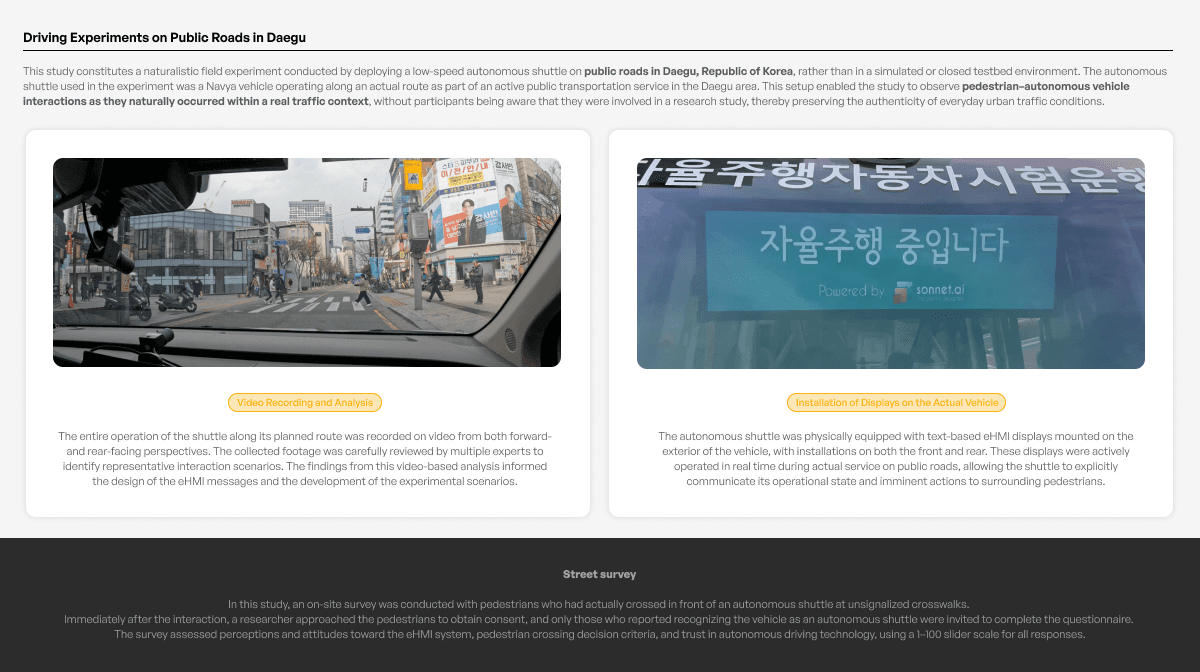
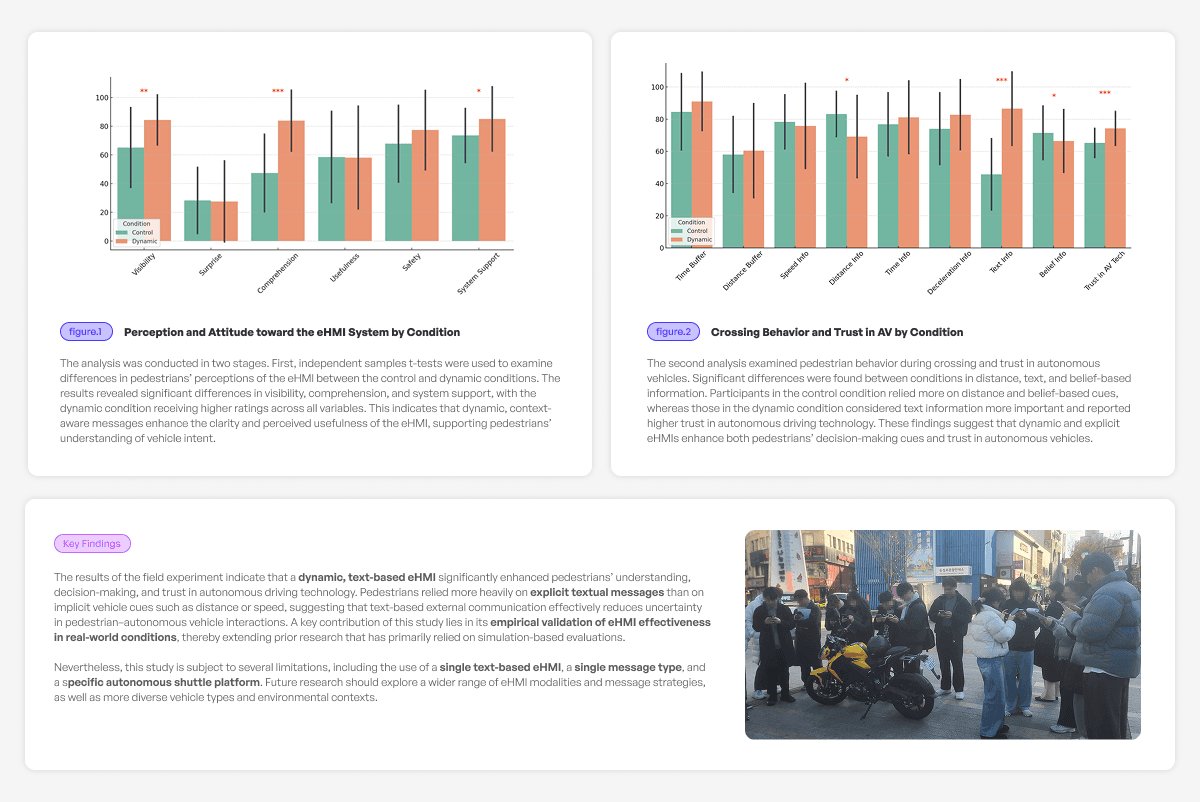
External human-machine interfaces (eHMIs) are designed to explicitly communicate autonomous vehicles’ (AVs) intentions, thereby enhancing safety in complex traffic interactions. This study evaluated the effectiveness of a dynamic text-based eHMI on an autonomous shuttle operating in a naturalistic setting at unsignalized crosswalks in South Korea. Through field observations, we identified scenarios in which traditional yielding or stopping messages were insufficient, especially under conditions of continuous pedestrian flow causing vehicle delays. Using this scenario, explicitly communicating the vehicle's imminent departure, was tested against a static control condition. Post-interaction surveys of 60 pedestrians revealed that the dynamic eHMI significantly improved message visibility, comprehension, and perceived system support. Additionally, pedestrians exposed to the dynamic eHMI prioritized explicit textual cues over implicit vehicle cues when deciding to cross, leading to increased trust in AV technology. These results highlight the practical value of context-sensitive, explicit eHMIs for enhancing real-world AV-pedestrian interactions.
Research
|
2024.02 - 2024.12
Outcome
[Paper] Hyunimin Kang, Hyochang Kim, Hyungchai Park, Hoseok Jung, Joonwoo Son, and Myoungouk Park. 2025. Real-World Validation of Dynamic Text-based eHMIs for Pedestrian Interaction with Autonomous Shuttles. In Adjunct Proceedings of the 17th International Conference on Automotive User Interfaces and Interactive Vehicular Applications (AutomotiveUI ’25). (Work-in-progress paper). DOI: [https://doi.org/10.1145/3744335.3758499]
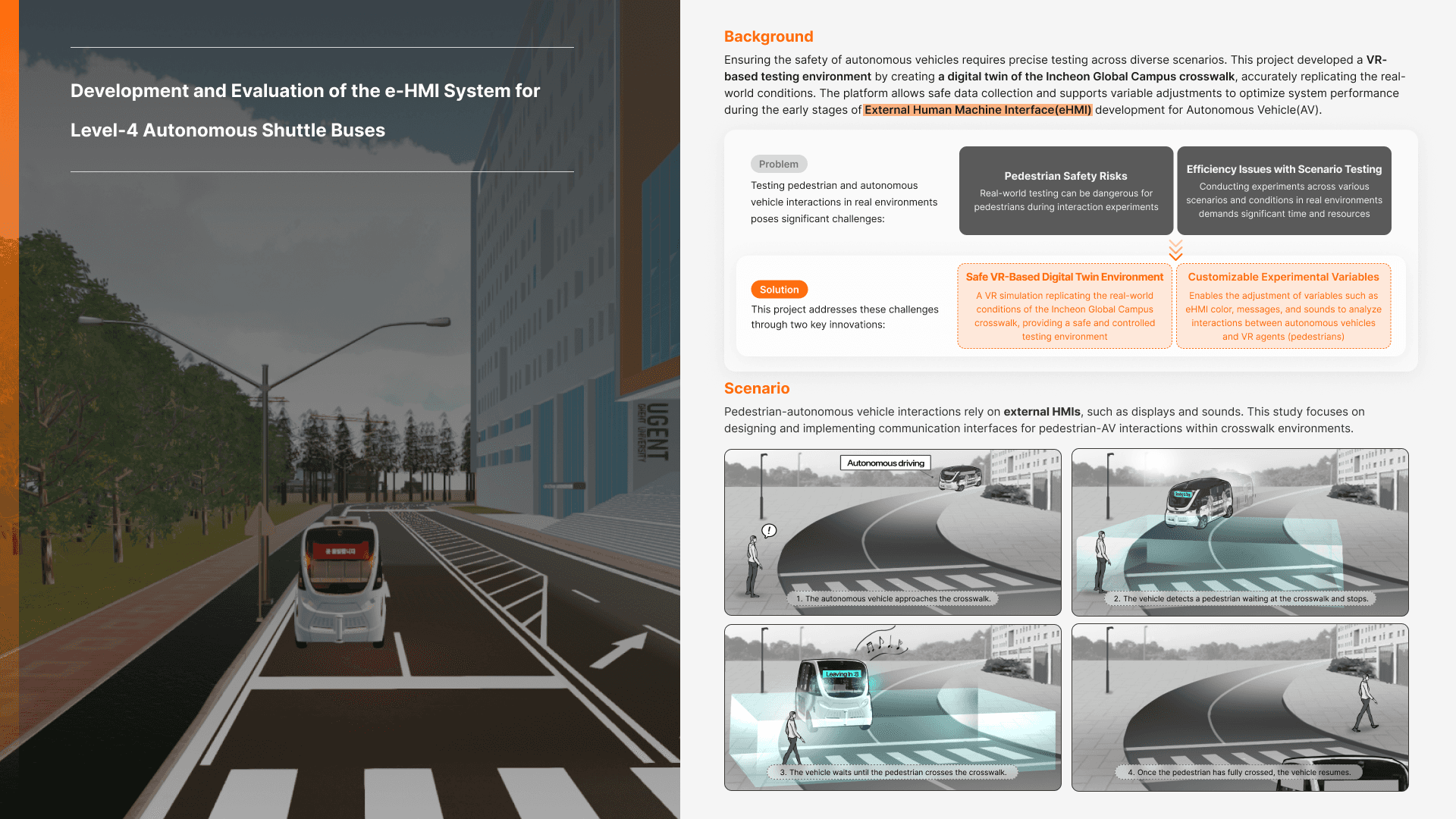
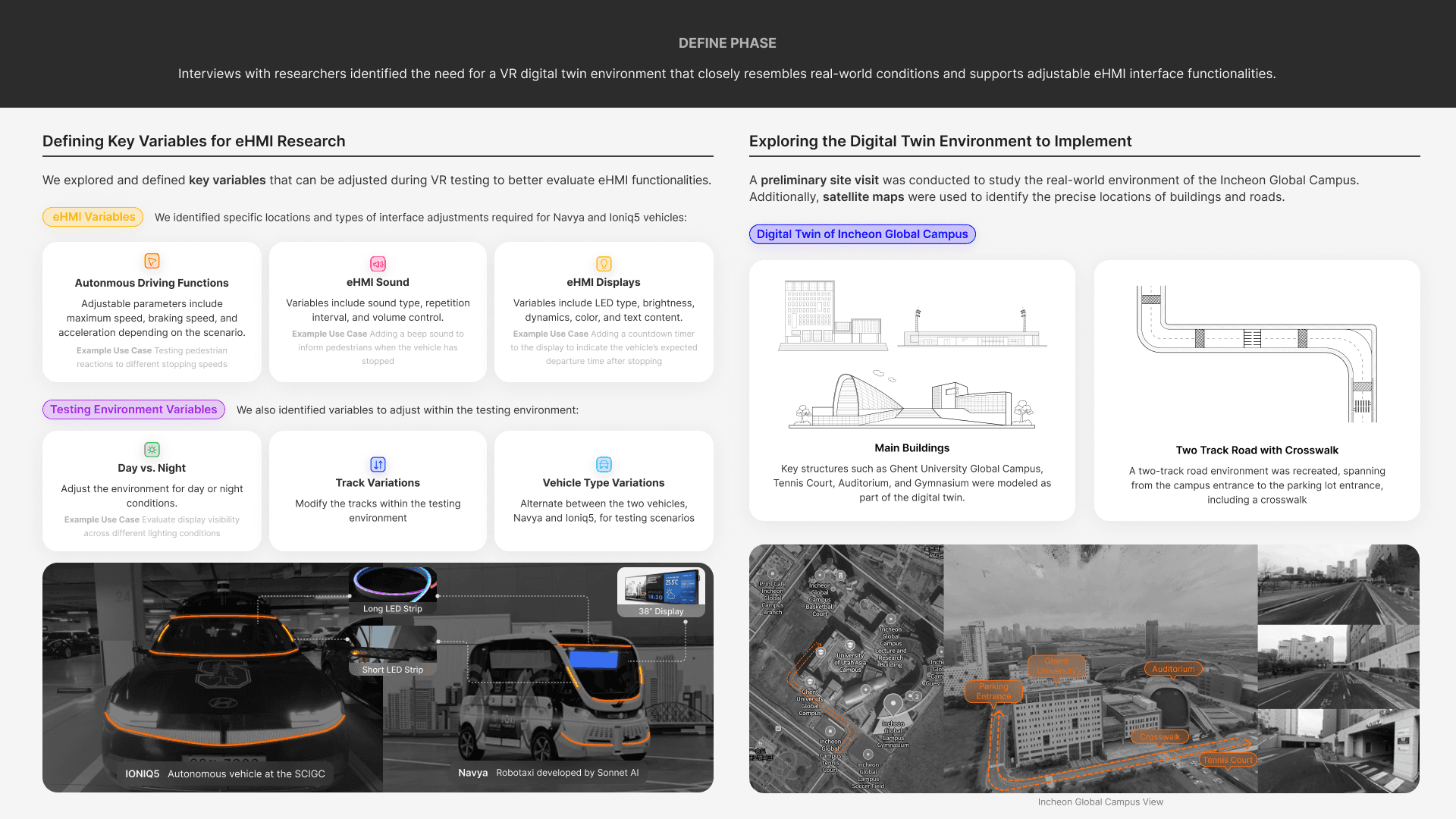
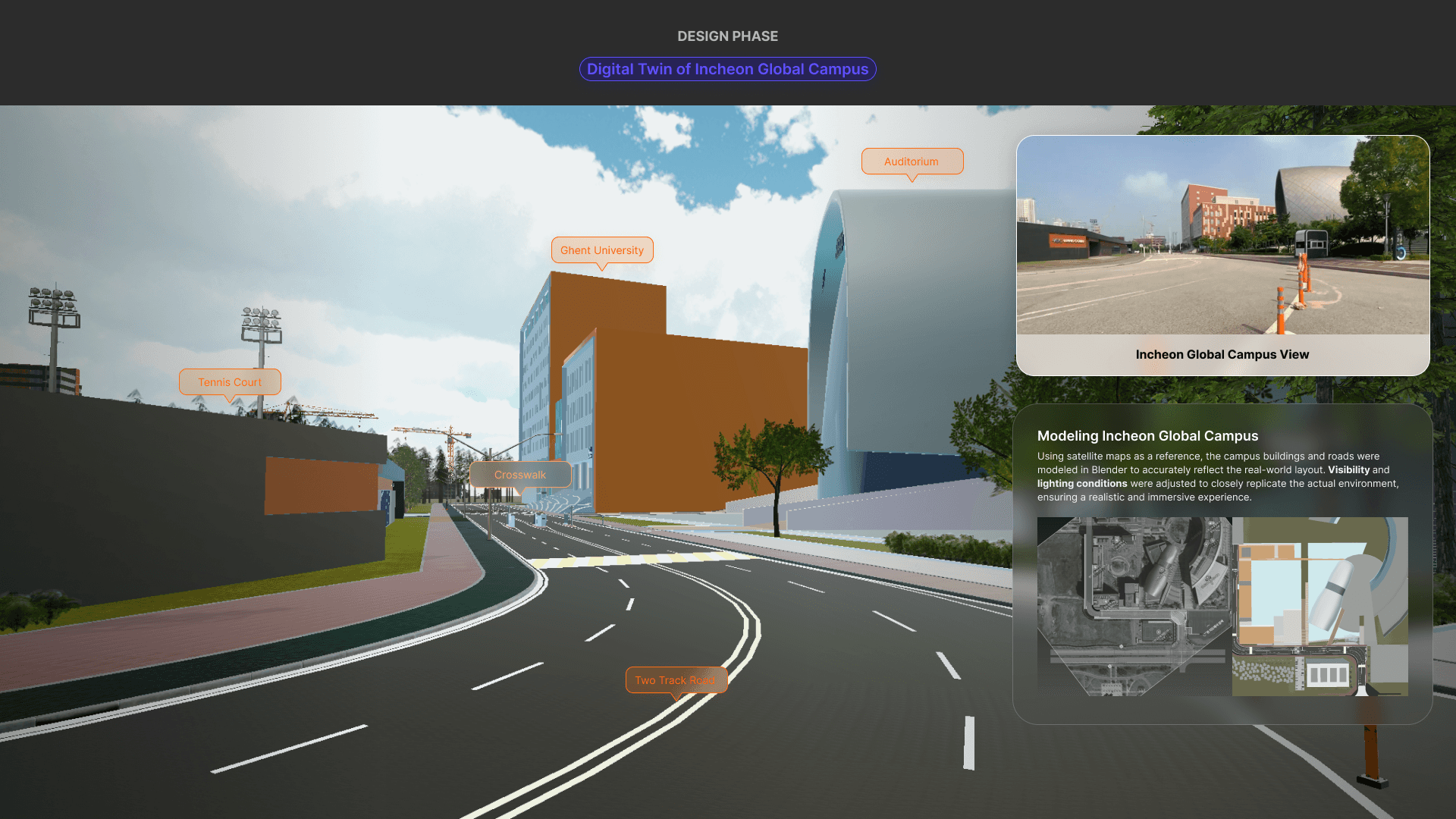
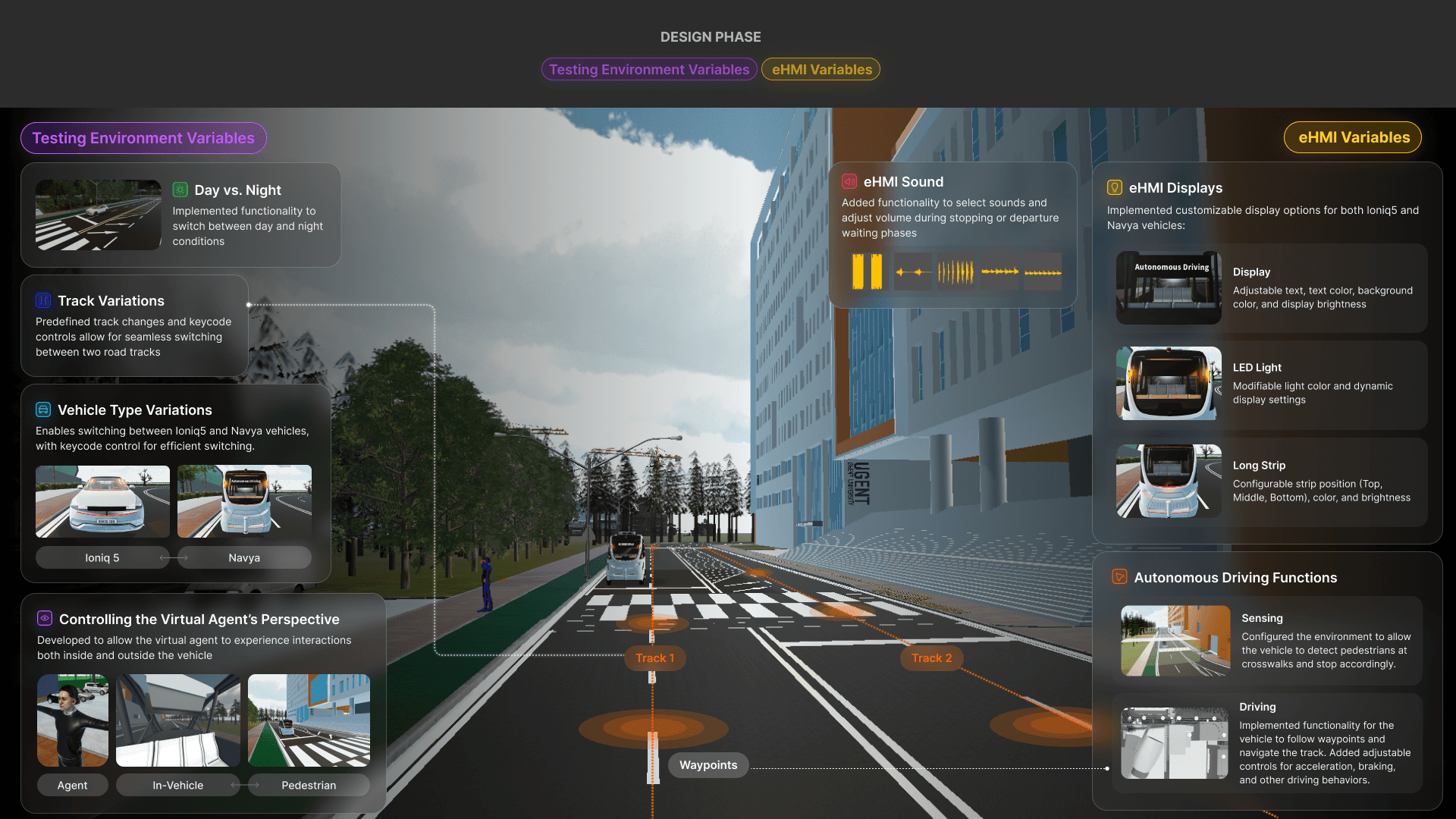
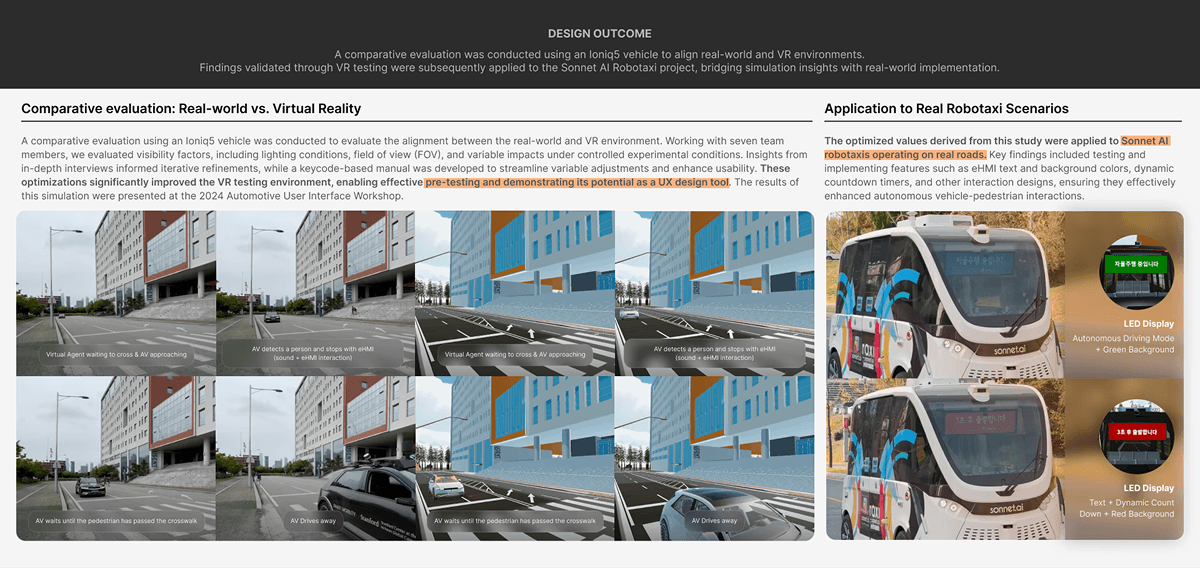
Vehicle-Pedestrian Interaction Implementation of roads within the Incheon Global Campus in VR
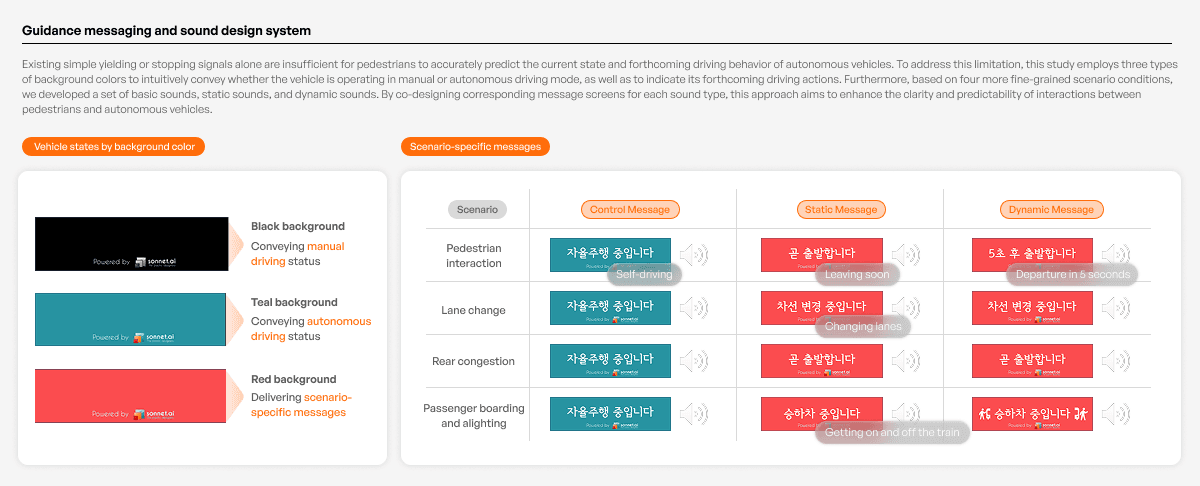
Designing Explicit Communication: Visualizing Time to Departure

Role and Responsibility