Mars Diver
DURATION
2023.09 ~ Present
2 years 4 months
(ongoing)
KEY WORDS
Space Exploration
Multimodal Haptics
Public Design
My Role
Team Leader
Haptic System Design
User Study Design
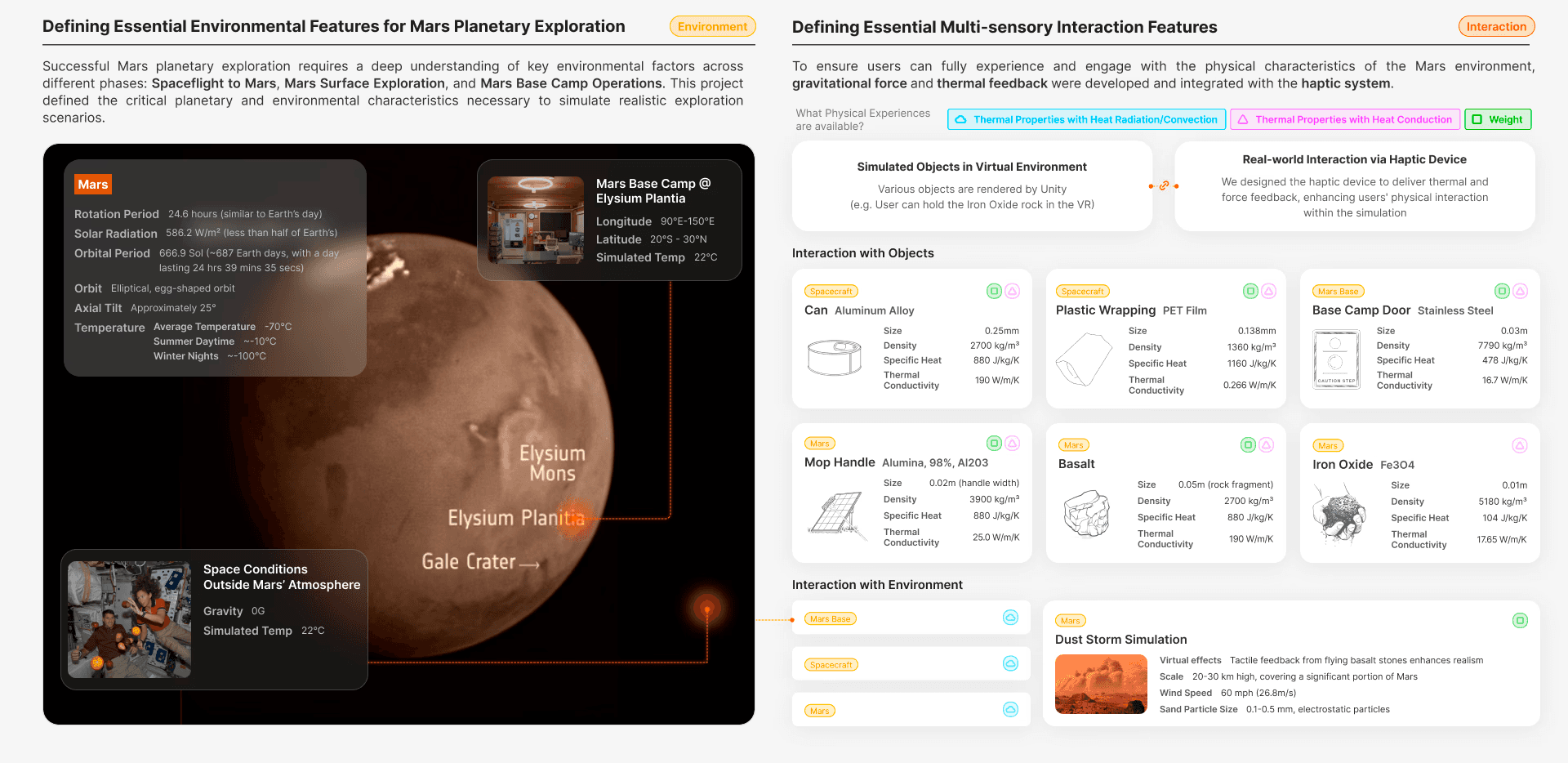
"Mars Diver" is an immersive VR simulation project designed to go beyond simple visual observation, offering users the experience of actually standing on the surface of Mars. While traditional VR exhibits in science museums have primarily focused on visual immersion, this project utilizes a custom-developed multi-modal haptic device to allow users to physically feel the Martian environment. Participants engage in a mission to restore power to a Mars base during a sandstorm by removing dust from solar panels. Throughout this process, users experience a highly realistic environment based on NASA's Jezero Crater data, including the sensation of 0.376G gravity, rapid temperature fluctuations felt through space suit gloves, and the physical warmth of solar thermal radiation. By delivering this vivid sense of presence, "Mars Diver" offers science museum visitors both deep educational value and the thrilling excitement of genuine exploration.
Independent Research | 2023.09 ~ Present
User Scenario
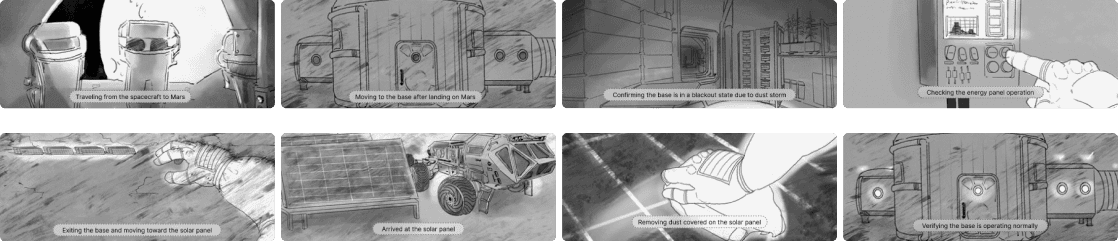
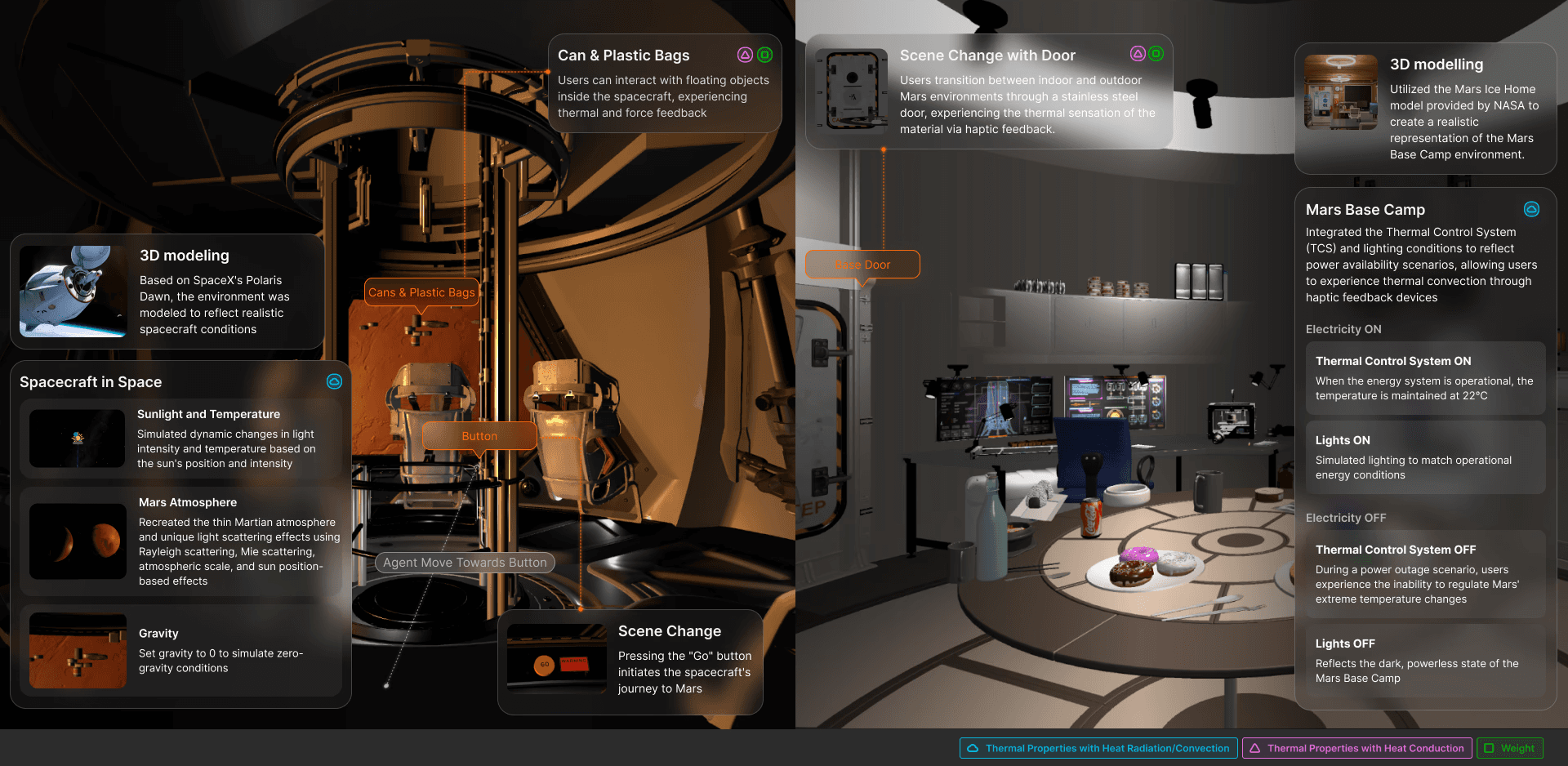
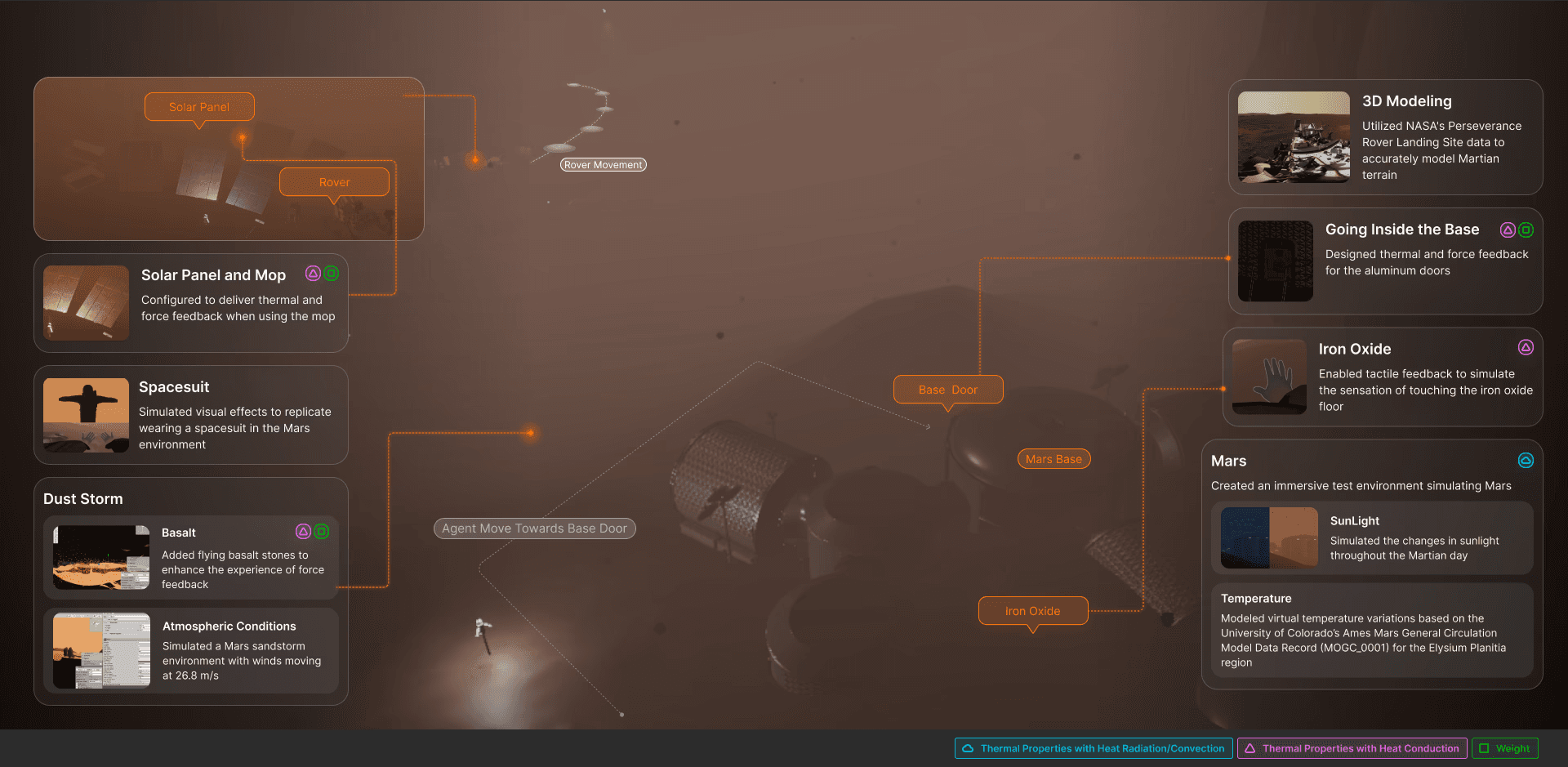
The simulation is divided into three phases : Spaceflight to Mars, Mars Surface Exploration, and Mars Base Camp Operations. Each phase incorporates thermal and kinesthetic haptic feedback allowing users to experience an interactie and immersive XR simulation tailored to the challeges of mars exploration
Detailed Simulator Design
User & Experts Feedback
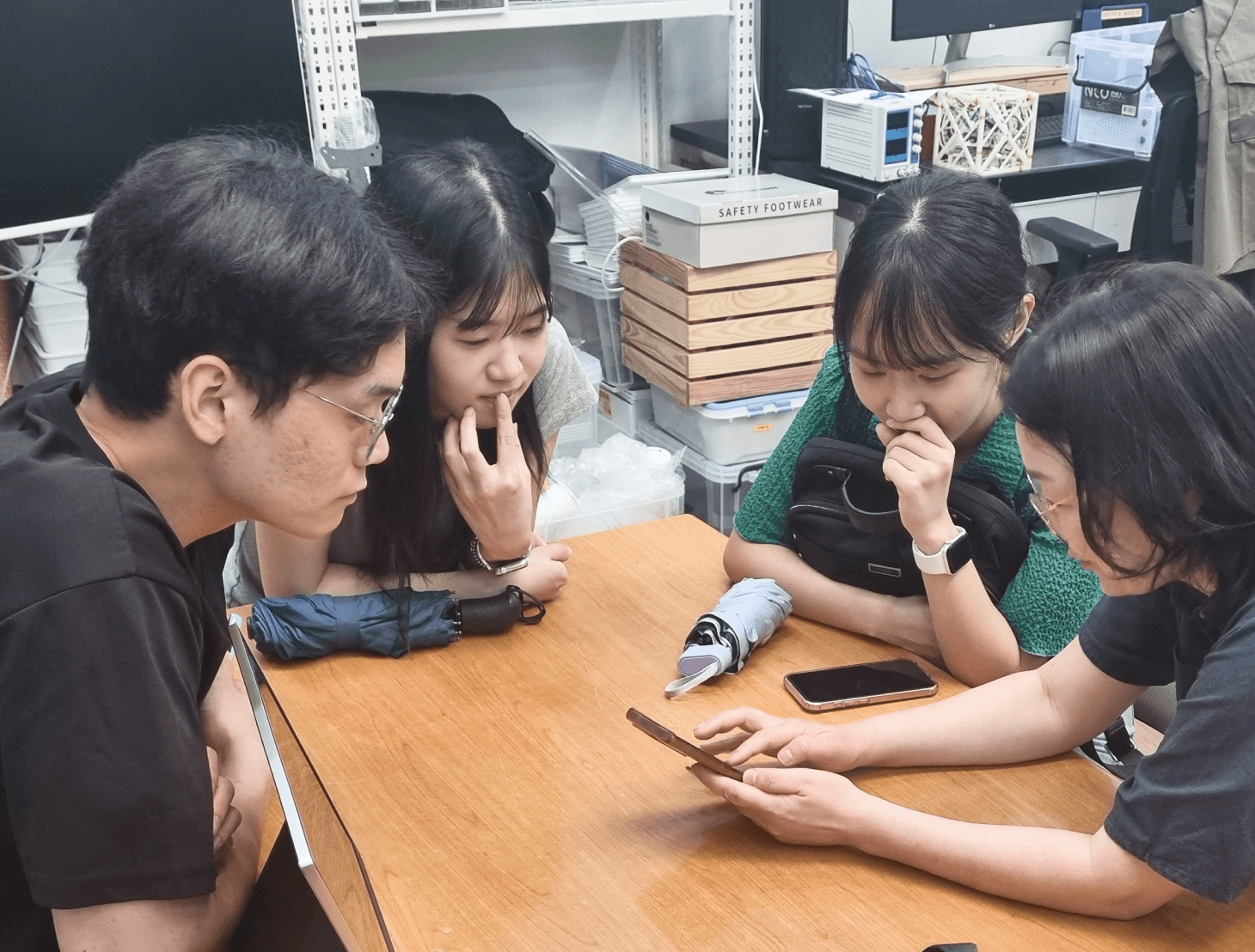
We iterated on Mars Diver by incorporating both expert guidance and in-the-wild user feedback from a science-museum environment. After meeting curator Hyangsook Shin, we identified a key operational constraint for public XR exhibits: a large portion of visitors are young (often under 13), which requires age-appropriate onboarding, clear facilitation, and a robust setup that works at scale. Following this recommendation, we ran a public demo booth during Science Day 2024 at the National Science Museum to evaluate the prototype with museum visitors.
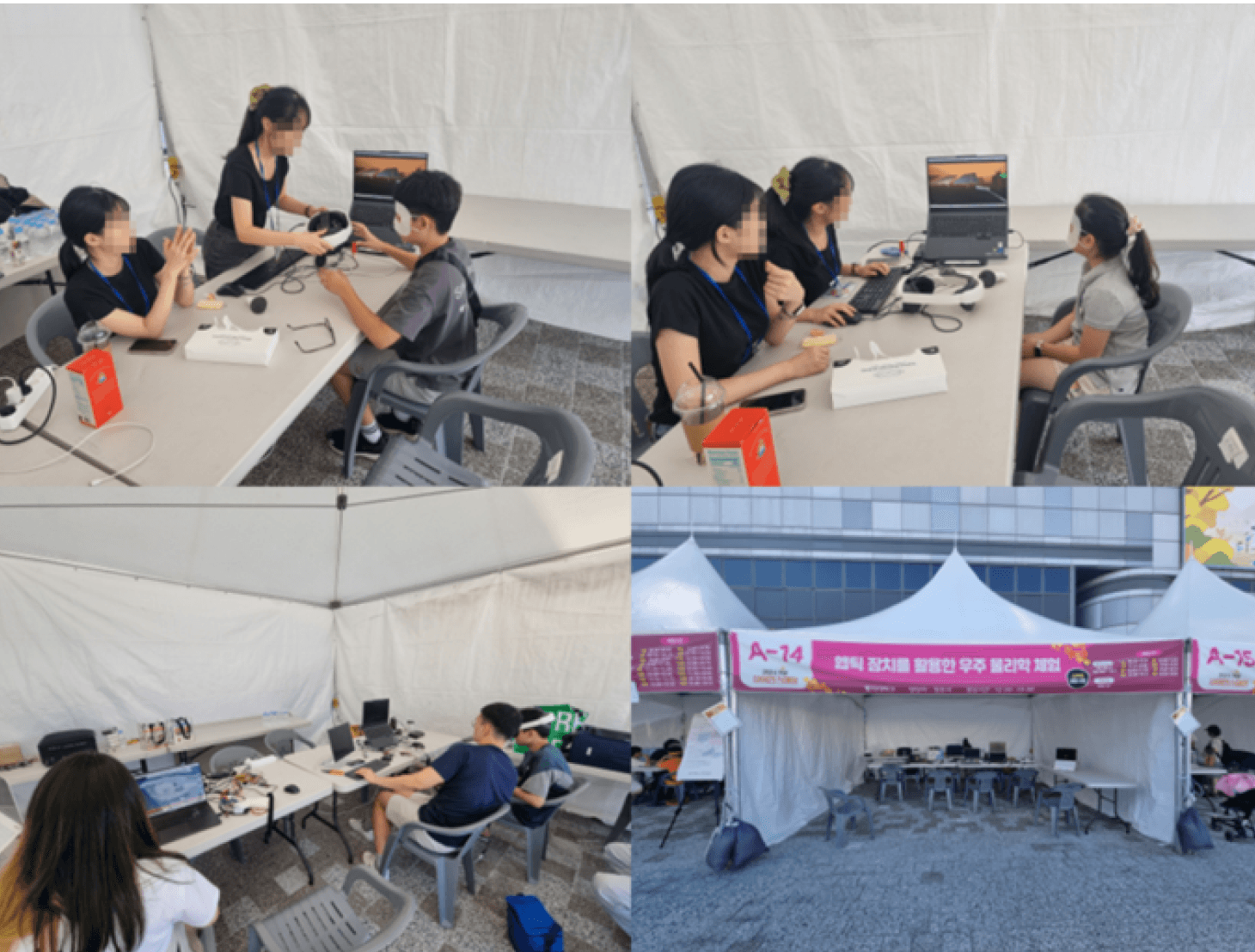
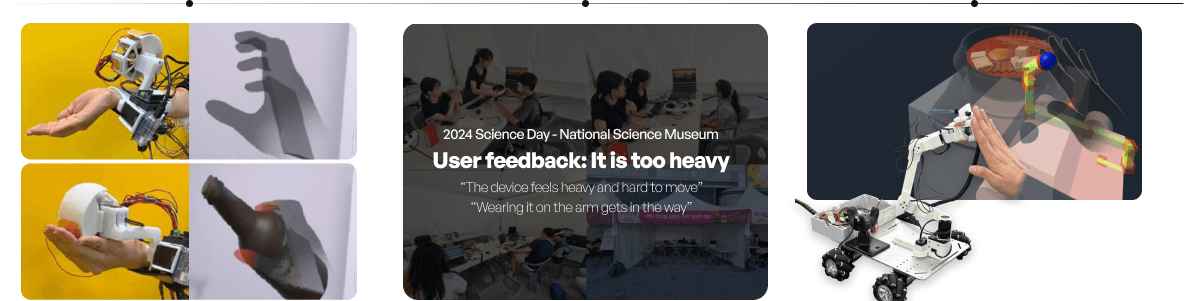
Haptic Device Configuration Reflecting Characteristics and Feedback of Young Science Museum Visitors: Shifting from Wearable to Non-wearable Mobile Systems
The sessions revealed that children were highly motivated to explore the scenario, yet wearing the hardware became the dominant factor limiting sustained engagement. In response, we reconfigured the haptic system toward a non-wearable mobile platform, reducing reliance on worn components and improving overall exhibit usability for young audiences.
Predictive Thermal Feedback via an Encountered-Type Haptic Display
For more details, please see our UIST Poster Paper [Link]
Overview : Predictive Encountered-Type Haptics

Step 1 - prediction: as the hand approaches a virtual object, we track the closest point on the hand and the nearest polygon on the object in the virtual scene.
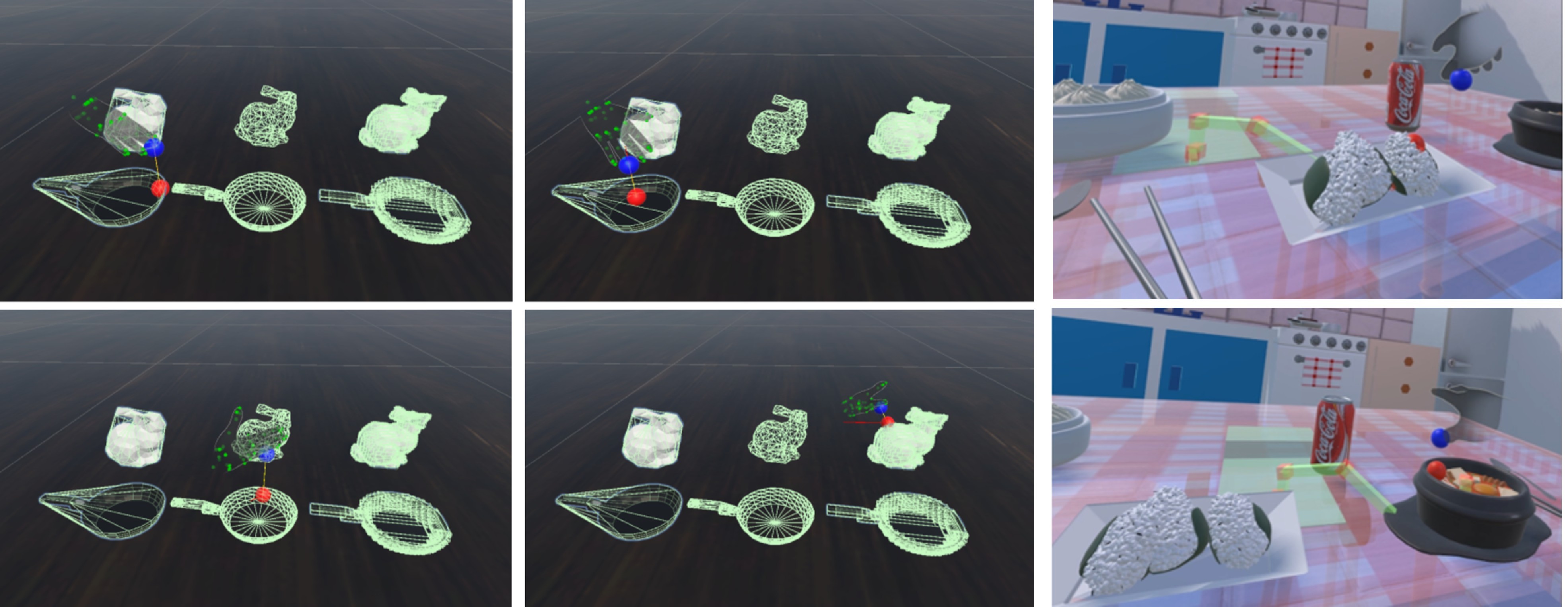
Step 2 - positioning: we reposition the thermal display to the predicted contact location using a robotic arm mounted on a Mecanum‑wheel‑based mobile platform.
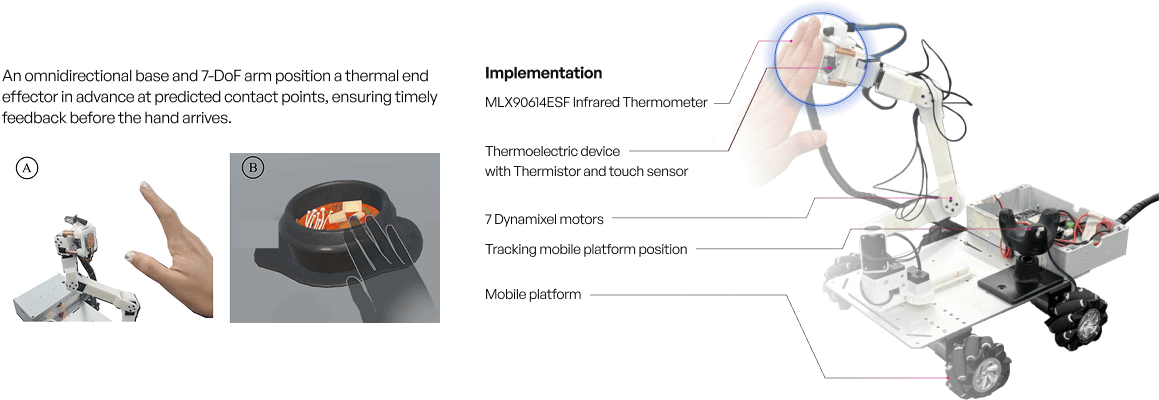
Step 3 - preheating: using the Ho & Jones thermal contact model, parameterized by the object’s thermal properties and its initial surface temperature, together with the user’s IR‑measured initial skin temperature, we compute a thermsl display target temperature trajectory.
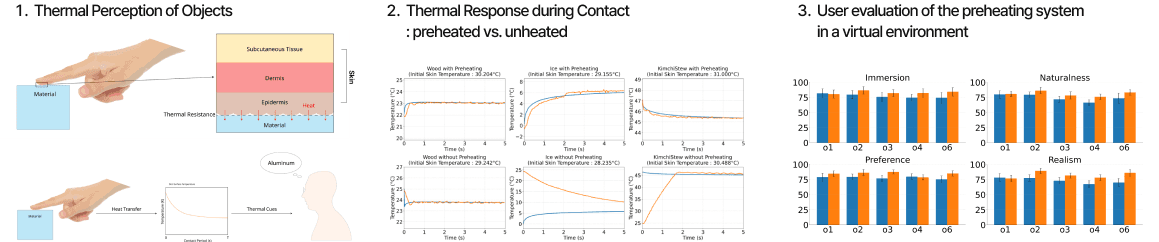
Conclusion
This study designs a non-wearable force-thermal multimodal haptic device suitable for VR exhibitions in science centers and museums, and proposes a space exploration scenario utilizing this system. By integrating a robotic arm with a Peltier-based thermal display, the proposed system tracks hand position in real-time and pre-heats the device based on predicted contact points, ensuring immediate force and thermal feedback upon contact.
Furthermore, through scenarios modeling diverse environments—including Earth, the Moon, Low Earth Orbit, and Mars—the study demonstrates the device's capability to experientially convey the differences in planetary temperature and gravity.
Role and Responsibility